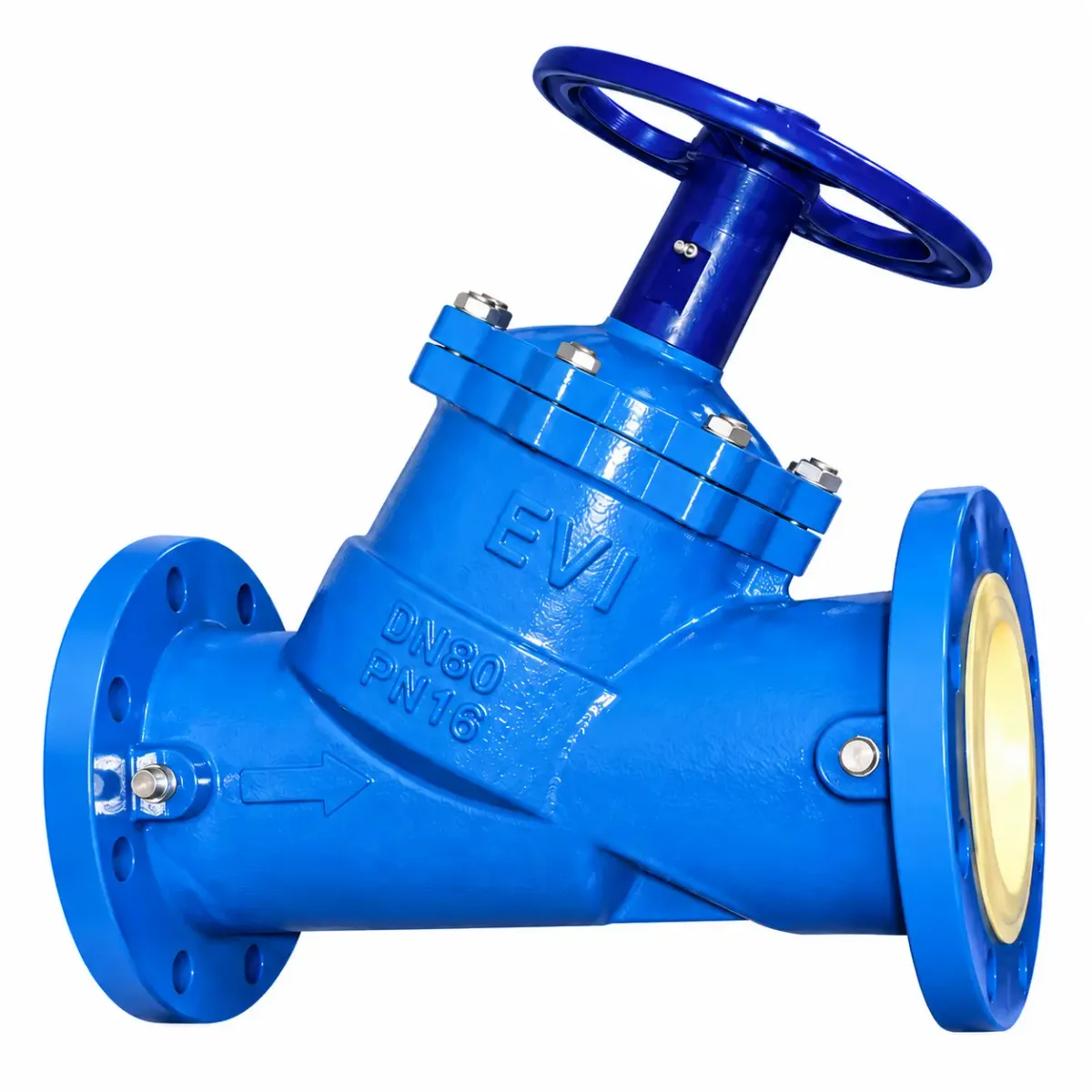
Balancing Valve
Industrial balancing valve for accurate flow adjustment, differential pressure measurement and hydraulic balancing in wa

Balancing Valve Manufacturer in Italy
A Balancing Valve is used to regulate and distribute liquid flow across industrial piping networks by introducing a controlled pressure drop. It helps maintain the required flow rate in individual pipeline branches, particularly in pumping systems where differences in hydraulic resistance can cause uneven flow distribution. The valve provides adjustable flow restriction, allowing operators to establish the required operating conditions during commissioning. As a Balancing Valve Manufacturer in Italy, Euro Valve Italia offers solutions for industrial water circulation and process utility pipelines where accurate flow adjustment, differential pressure measurement and repeatable balancing settings are required. A balancing valve regulates flow by changing the effective opening through its internal disc or plug mechanism. As the opening decreases, hydraulic resistance increases, reducing the flow rate under a given differential pressure. Manual balancing valves may incorporate calibrated handwheels, position indicators and pressure measurement points. These features allow operators to adjust the valve setting and determine flow using the manufacturer's published Kv characteristics. Balancing valves may be constructed using carbon steel ASTM A216 WCB, stainless steel ASTM A351 CF8M or 316L, depending on fluid properties and operating requirements. Duplex stainless steel may also be considered for specialised corrosion-resistant applications. Internal components such as stems, discs and regulating elements are selected according to the required pressure, temperature and flow characteristics. Threaded ends are suitable for certain compact designs, while flanged connections are commonly used for larger industrial pipelines. The selection of a balancing valve depends on design flow rate, available differential pressure, Kv range and the required adjustment accuracy. Correct sizing allows the valve to operate within a practical regulating range without introducing excessive pressure loss. Where flow conditions vary significantly, automatic balancing arrangements may be considered to maintain the required hydraulic performance.Working Principle and Flow Adjustment
Construction and Material Options
Performance and Technical Selection
Frequently Asked Questions
Find quick answers to common questions about this product.
A balancing valve adjusts the flow rate through individual branches of a piping network to achieve the required hydraulic distribution. It introduces a controlled pressure drop that allows technicians to regulate flow during commissioning. Proper balancing helps prevent excessive flow in some branches and insufficient flow in others.