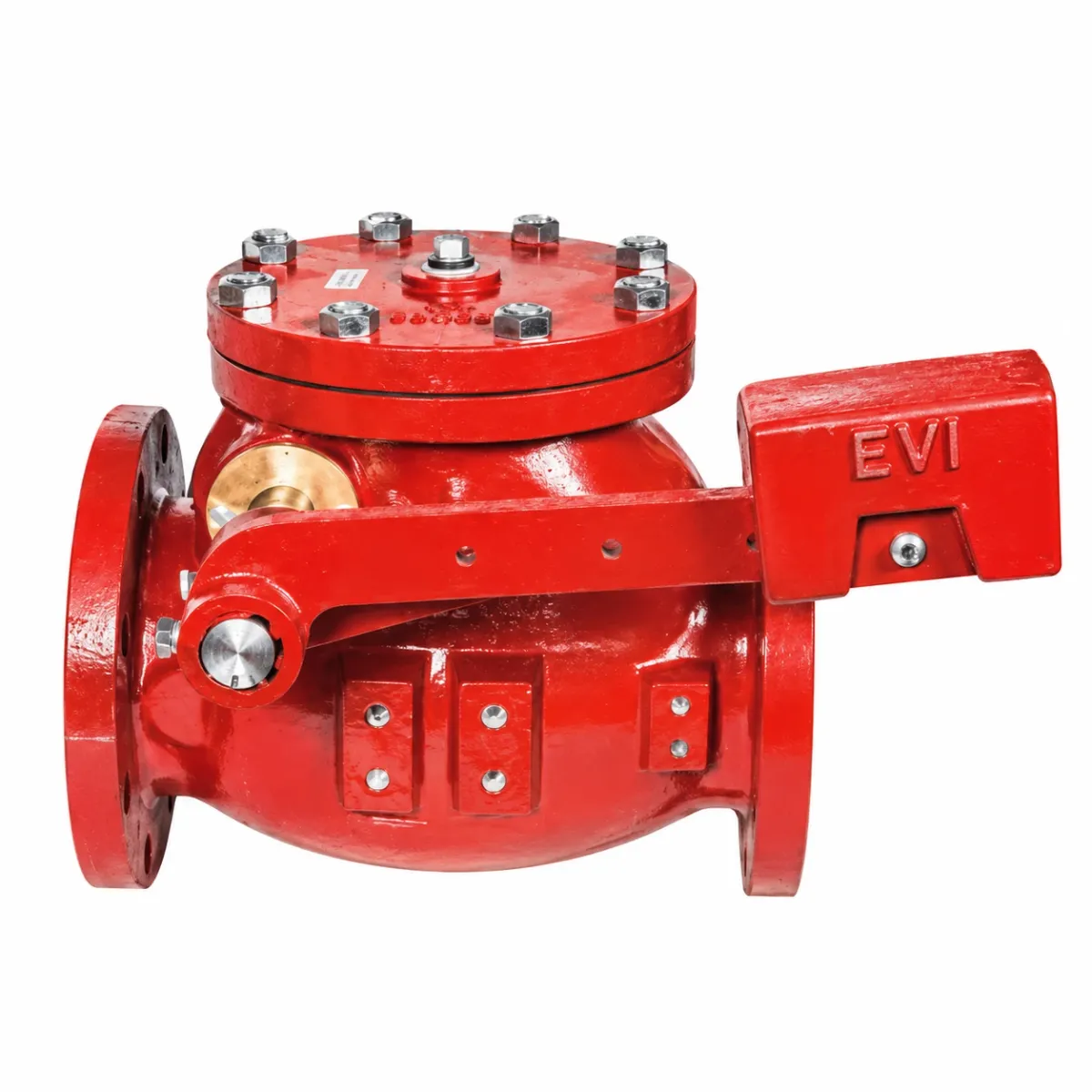
Unidirectional Knife Gate Valve
Unidirectional knife gate valve with directional shutoff, resilient or metal seats and manual or pneumatic operation.

Unidirectional Knife Gate Valve Manufacturer in Italy
Unidirectional Knife Gate Valves are designed for on-off isolation in pipelines where the principal sealing pressure acts from a specified direction. A flat metallic gate moves across the flow passage and closes against a seat supported by the valve body. This construction is used in wastewater treatment, sludge handling, chemical processing and other industrial systems involving liquids or suspended solids. Euro Valve Italia manufactures unidirectional knife gate valves in Italy, with configurations selected according to the required pressure direction, operating differential pressure, seat construction and fluid characteristics. For a Unidirectional Knife Gate Valve Manufacturer in Italy, these technical considerations are particularly important because incorrect installation direction or unsuitable seat selection can affect shutoff performance. Body material, gate design and actuator thrust must also be matched to the application. The valve incorporates a sealing arrangement designed to withstand pressure applied from its designated pressure side. In typical constructions, the gate is supported by guides and closes against a seat positioned to provide the specified shutoff performance. Resilient seats may be selected for applications requiring tighter leakage control, while metal-seated configurations can be considered for suitable elevated-temperature or abrasive services. EPDM and NBR are among the commonly used resilient seat materials. Their suitability depends on operating temperature, chemical compatibility and the characteristics of the process fluid. Reverse-pressure resistance must not be confused with reverse-pressure sealing. Some unidirectional valves can tolerate limited pressure from the opposite direction without providing leak-tight shutoff. The valve uses a sliding metallic gate guided within the body during opening and closing. Gate thickness, surface finish and alignment influence mechanical strength, sealing contact and operating resistance. Stainless steel grades such as 304 and 316 are commonly considered for gate construction. Hardened surfaces or other wear-resistant treatments may be specified for suitable abrasive applications. For fluids containing suspended solids, the body cavity and seat geometry should reduce the likelihood of particles becoming trapped during closure. Unidirectional knife gate valves are generally intended for isolation rather than continuous flow regulation. Repeated throttling can expose the gate and sealing surfaces to concentrated flow velocities and accelerated wear. Unidirectional knife gate valves may be operated using handwheels, gear mechanisms, pneumatic cylinders, hydraulic actuators or electric actuators. Actuator selection depends on valve diameter, differential pressure, gate friction, seat compression and operating frequency. Powered actuation may be appropriate where frequent operation or higher closing thrust is required. The permissible working differential pressure is determined by the valve construction and may decrease with increasing nominal diameter. Flange drilling, nominal pressure designation and maximum shutoff differential pressure must therefore be considered separately during valve selection.Directional Sealing and Seat Design
Gate Construction and Solids Handling
Working Pressure and Actuation
Frequently Asked Questions
Find quick answers to common questions about this product.
A unidirectional knife gate valve is designed to provide shutoff against pressure from a specified side, whereas a bidirectional knife gate valve is designed to seal against pressure from either side. The main distinction is the sealing arrangement and its rated pressure direction. Bidirectional valves are generally considered when reverse pressure or two-way isolation is required.