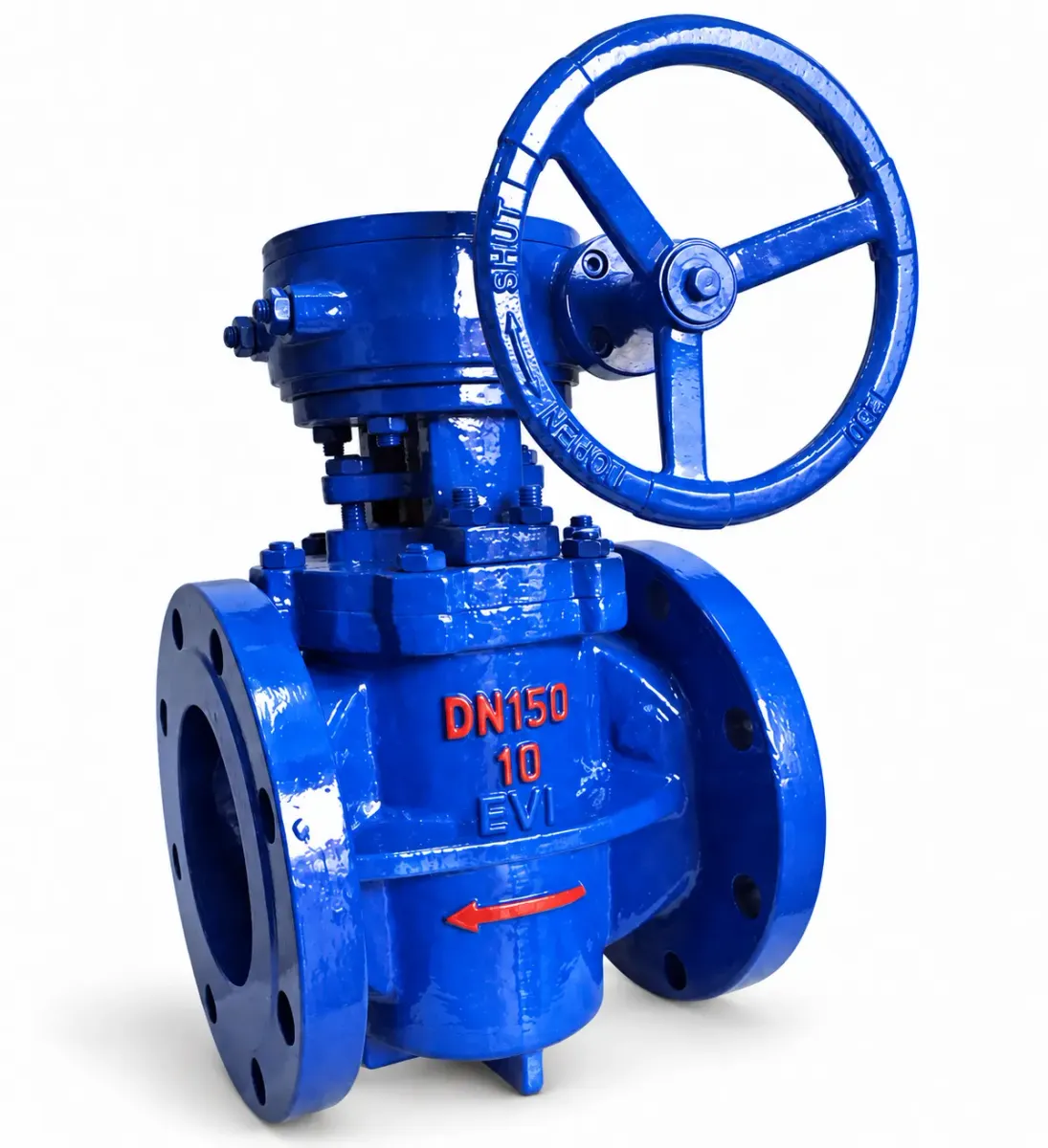
Slurry Knife Gate Valve
Slurry knife gate valve with abrasion-resistant sealing, linear gate movement and pneumatic or hydraulic actuation.

Slurry Knife Gate Valve Manufacturer in Italy
Slurry Knife Gate Valves are engineered to isolate pipelines transporting mineral slurries, abrasive suspensions, sludge and other fluids containing suspended solids. Their sliding gate moves perpendicular to the flow, allowing the valve to close across the pipeline bore. The sealing arrangement is selected to withstand contact with solid particles while maintaining the required shutoff performance under specified differential-pressure conditions. Mining and mineral processing applications place particular demands on valve construction because abrasive particles, high solids concentrations and repeated operating cycles can accelerate wear. Euro Valve Italia's slurry knife gate valve configurations address these conditions through suitable body materials, corrosion-resistant gates, replaceable sealing arrangements and appropriately sized actuators. As a Slurry Knife Gate Valve Manufacturer in Italy, the technical focus is on matching the valve construction to the actual slurry characteristics and operating requirements. The valve uses a flat metallic gate that travels through the sealing assembly to interrupt flow. Gate thickness, surface finish and material hardness influence its resistance to mechanical wear and deformation. Stainless steel gates, including suitable 304 and 316 grades, may be selected for corrosion resistance. Hardened surfaces or specialised coatings can be considered where abrasive particles create severe wear conditions. Gate alignment is important because uneven loading or accumulated solids can increase friction and interfere with complete closure. Slurry knife gate valves may incorporate resilient sleeves, replaceable seats or other engineered sealing systems. In suitable sleeve-seated configurations, elastomeric components provide sealing contact around the gate. Some designs use opposing sleeves to control slurry ingress and maintain sealing performance during operation. Seat selection depends on particle size, solids concentration, fluid chemistry, temperature and differential pressure. Abrasion-resistant elastomers may be suitable for certain mineral slurries, while alternative sealing materials may be required for chemically aggressive or elevated-temperature services. Slurry knife gate valves operate through linear gate movement using a stem, handwheel or powered actuator. The force required to open or close the valve depends on differential pressure, gate dimensions, seat compression and friction caused by suspended solids. Pneumatic and hydraulic actuators are commonly considered for larger valves, frequent operation and applications requiring higher operating thrust. The maximum permissible differential pressure must be evaluated separately from the nominal flange pressure rating. In some valve constructions, the allowable differential pressure decreases as valve diameter increases.Gate Construction and Abrasion Resistance
Sealing Arrangement and Slurry Containment
Differential Pressure and Actuator Selection
Frequently Asked Questions
Find quick answers to common questions about this product.
Hard mineral particles can accelerate wear on the gate, seat and internal surfaces, particularly at high flow velocities. Abrasion resistance depends on the selected materials, particle concentration and operating frequency. Applications involving hard mineral slurries may require specialised gate surfaces and sealing arrangements.